
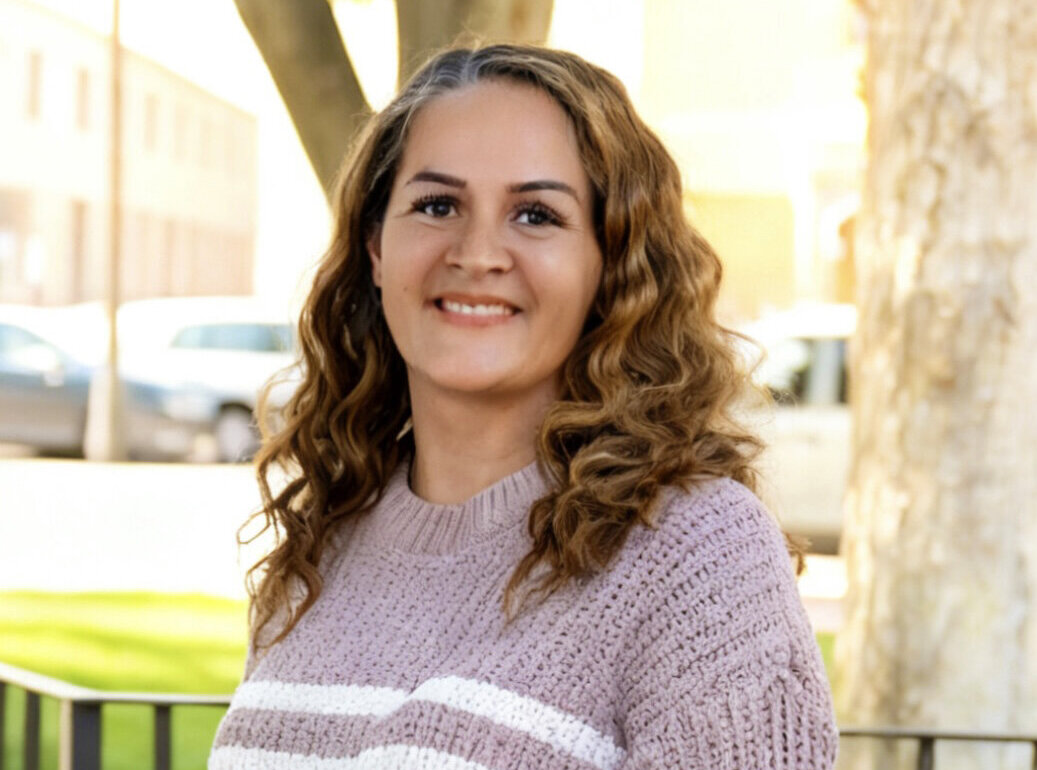
When Desiree Woodard walks across the stage this December to receive her Master of Social Work degree from Western New Mexico University, the achievement will mark a triumphant milestone in a journey defined by a firm commitment to helping others.
Woodard, who worked for years in nursing, managed a challenging childhood plagued by poverty, trauma and family addiction. Becoming a mother at 15 temporarily delayed her pursuit of higher education, but it never extinguished her passion for learning or her resolve to break generational cycles.
Like many non-traditional students at WNMU, Woodard juggled numerous demands and priorities while earning her master’s degree, including school, full-time work, and a decade of direct patient care for her ill husband and child while raising four children.
Woodard discovered that her true calling lay in the deep, one-on-one relationships she builds with patients. Her personal experiences provide a natural capacity for empathy, drawing her toward therapeutic mental health work. Recognizing social work as a flexible field where she could combine holistic care with organizational support, Woodard enrolled in the WNMU online MSW program.
Woodard particularly credits adjunct faculty member Jeanine Rodriguez, who teaches the MSW internship courses, for providing pivotal mentorship during her practical training. She recalls a touching piece of wisdom Rodriguez shared early in her internship: the “seven-minute rule,” a practice where peers or colleagues can request seven uninterrupted minutes to decompress, share emotional burdens or process difficult cases without censure.
“That advice stuck with me throughout my internship and has changed how I show up for others,” Woodard shared. “Whether it’s supporting a colleague after a tough case or simply being present for my children, learning to give someone those seven minutes of pure support and engaged listening has been priceless.”
For the past four semesters, Woodard has completed her clinical internship at Sandia Therapy and Wellness Center in Albuquerque, where she provided individual psychotherapy. Learning evidence-based modalities like Dialectical Behavior Therapy, she helped clients identify root emotional triggers, develop healthy coping mechanisms, and manage trauma. Woodard’s unique background as a nurse allowed her to spot physiological signs of medication toxicity and manage complex health conditions alongside mental health needs. Upon graduation, Woodard will remain at Sandia Therapy and Wellness Center as a clinician while working toward her independent licensure.
She envisions establishing a comprehensive, holistic sober living facility for people recovering from substance use disorders. Woodard’s model will offer a continuum of care starting from initial withdrawal through sustained stability. Having seen firsthand how addiction fractures familial trust, Woodard aims to provide the structured accountability and wrap-around assistance needed for individuals to rebuild their lives and safely reconnect with loved ones.
“Every person deserves a caring environment to heal,” Woodard said. “My goal is to give people the tools, accountability, and grace they need to get back on their feet and reunite with their families.”
To non-traditional students and career changers hesitant to return to school, Woodard’s advice is simple: “Go for it. Life is constantly changing, and it is never too late to learn something new or invest in yourself.”