
As Western New Mexico University prepares to celebrate its graduating students at Fall 2026 commencement, the university is spotlighting their remarkable journeys. The ongoing series will share inspiring accounts of resilience, career pivots and dedication, showcasing what it truly means to cross the finish line as a Mustang.
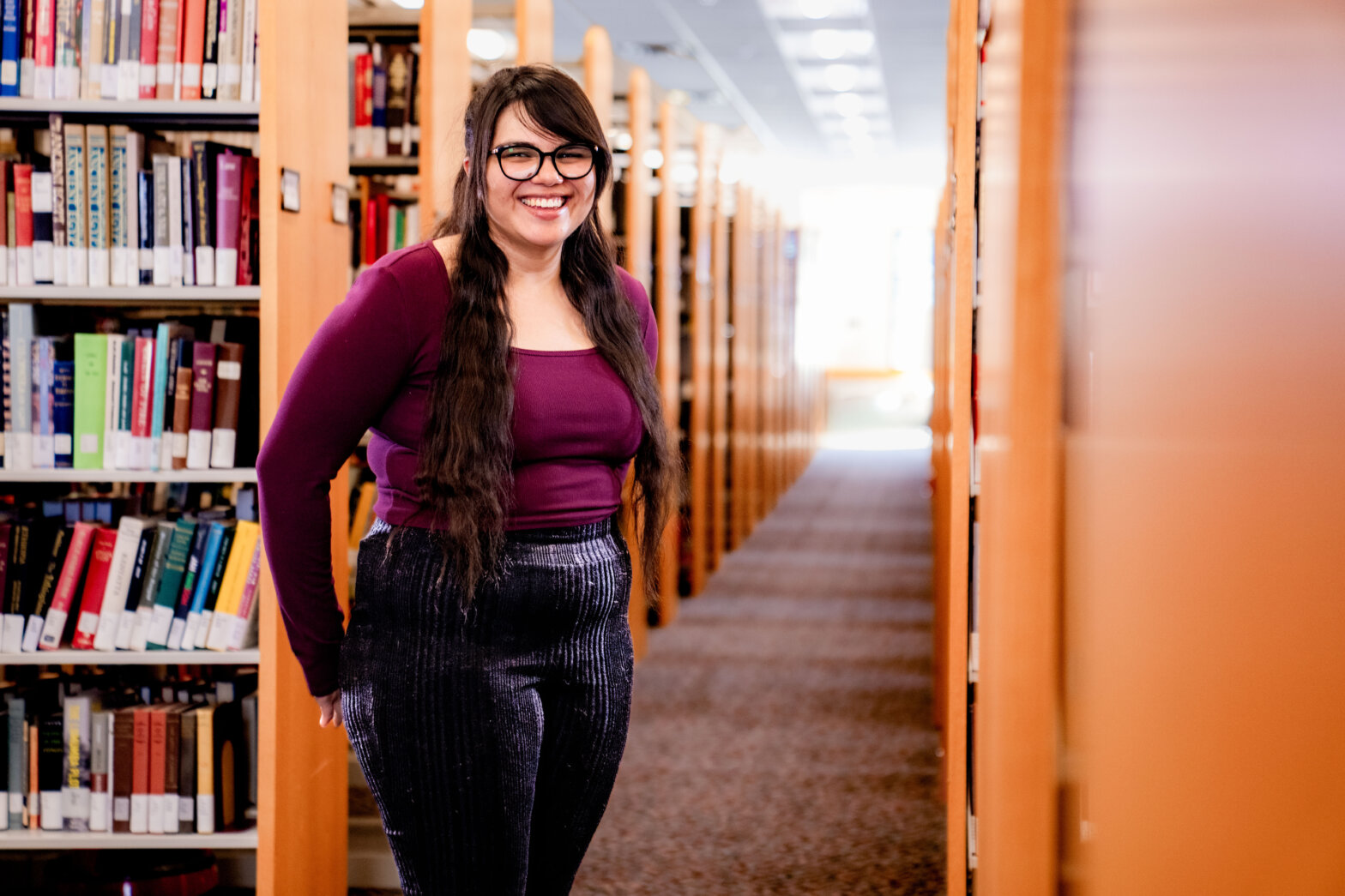
WNMU graduate Maria Conklin proves that scientific study and artistic expression aren’t mutually exclusive. Graduating this fall with a Master of Interdisciplinary Studies in biology and expressive arts, Conklin has built an academic course that connects complex ecological systems and public storytelling.
A native of Hurley, New Mexico, and a graduate of Cobre High School in Bayard, Conklin first arrived at WNMU attracted by its undergraduate zoology degree. With a lasting fascination with animals and field research, along with a passion for drawing and painting, she originally pursued a Bachelor of Science in Zoology. However, after rediscovering her love for painting during an undergraduate elective, she sought a way to merge her two passions.
When Conklin learned about the WNMU interdisciplinary master’s program, she realized it offered the exact framework she needed. “My dream degree is to be able to include both things that I love the most into one degree,” Conklin said.
Rather than separating the scientist from the artist, Conklin uses her illustrations to make detailed biological concepts and ecological ideas understandable and accessible to the wider public, particularly children. Her work stresses compassion and emotional connection, turning scientific observations into riveting narratives.
A key moment in her academic development came during her senior undergraduate research project on kangaroo rats at City of Rocks State Park, where she investigated their dietary behaviors and interactions with human environments. The research inspired her current project: an illustrated children’s book that follows a kangaroo rat and encourages young readers to appreciate local wildlife and understand how littering affects fragile desert ecosystems.
Conklin credits the supportive faculty at WNMU, including opportunities to assist in undergraduate labs provided by professors, including William Norris, Ph.D., and Professor of Biology Lynn Haugen, Ph.D., with deepening her collegiate experience. Conklin also frequently presented her research at events such as the Gila Symposium.
“My goal is to make science approachable and foster a real sense of empathy for the natural world in young readers,” Conklin noted, emphasizing her dedication to creating accessible children’s literature that bridges the gap between complex ecological concepts and everyday public understanding.
After graduation, Conklin plans to save money before pursuing outdoor field research and publishing her children’s book, with plans to share the completed work first with the visitor center at City of Rocks. Long term, Conklin plans to pursue a Ph.D. within the next decade to continue her research and advocacy for the natural sciences.
Looking back on her time at the university, Conklin encourages prospective students to tap into the close-knit campus community. “Don’t ever hesitate to ask them for help or support or questions because that’s one of the benefits we get from coming to such a small university,” she said.