
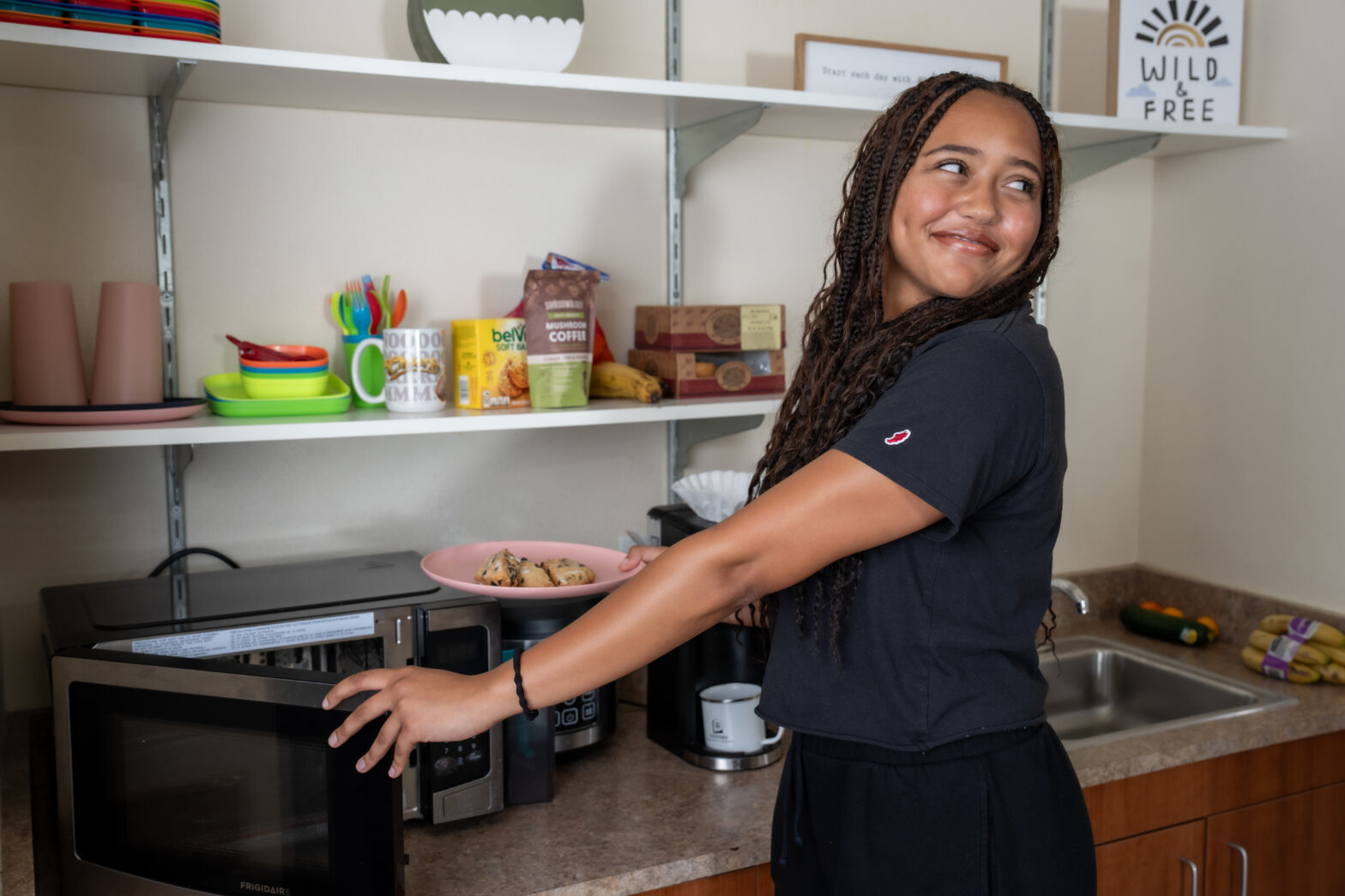
Western New Mexico University underwent a major campus-wide residence life upgrade earlier this year, equipping every dorm suite with specialized kitchen appliances, including combination cold storage units and multi-functional microwave, air fryer, and convection oven units. This initiative is designed to enhance residential living and combat food insecurity, giving students greater autonomy over their diet, nutritional choices, and cooking skills.
The project began with a critical need identified by campus leadership during periods when university dining facilities close for holidays and semester breaks. On-campus residents who stayed in the dorms often lacked the financial resources to purchase microwaves or cold storage appliances, making affordable meal options scarce when the dining hall was unavailable.
What started as a plan to create a small pool of temporary loaner appliances for campus holiday breaks quickly evolved into a permanent, university-wide upgrade. WNMU officials recognized that a more sustainable solution was required.
“We wanted students to care for themselves regarding food security,” said Kim Woodard, student services coordinator. “Looking at it holistically, we realized that what we were doing was good, but we weren’t addressing the entire issue of food insecurity and new approaches were needed.”
The urge to find long-term, structural solutions was further driven by shifting funding landscapes. As traditional grant funding and external food donations have shrunk in recent years, student demand for healthy food options has steadily climbed. Rather than scaling back, Woodard and WNMU responded by giving students direct control over their daily nutrition through dorm-approved, all-in-one appliance suites across all residence facilities.
Providing equipment was only one piece of the puzzle. Recognizing that having the means to cook does not automatically translate to knowing how to cook, Woodard expanded the effort through the WNMU One Stop resource center. There, students can find curated recipes featuring clear cooking instructions, ingredient identifications, and detailed nutritional information. These recipes are designed to help students build practical culinary confidence and will eventually be compiled into a published recipe book for the student body.
The campus-wide transformation was no small feat and took roughly six months of planning, inter-departmental agreements and community collaboration to execute.
“Housing and Administration were amazing, the WNMU Foundation provided financial support, and Roadrunner Foodbank was fantastic in its support,” Woodard said. “Several student workers and faculty also worked hard to champion and complete the work.”
Maintaining strict stewardship of university funds remains a priority for Woodard, who routinely coordinates with external partners and internal campus departments to stretch resources. She meets regularly with representatives from Aramark—who also provided a substantial donation of hygiene products for students—and collaborates with the WNMU Horticulture Department, which supplies fresh herbs directly from campus herb gardens to the One Stop pantry. Additionally, Roadrunner Foodbank donated a commercial-grade freezer to the One Stop to increase cold-storage capacity for fresh produce and perishables.
Student feedback has been overwhelmingly positive. Residents have expressed gratitude for the newfound autonomy over their daily schedules and dietary choices. For several students, the combination of pantry support and in-dorm cooking equipment has been vital, noting that without these resources—particularly during campus closures and summer months—they would have faced severe food shortages.
“There are so many people coming together to help; it’s been amazing,” Woodard said. “Our goal is to ensure students receive not just pre-processed food, but fresh, healthy, and nutritional choices every day.”